
China high-speed rail is one of the easiest ways for foreign travelers to move between major cities, but the booking and station process can feel unfamiliar. This guide walks through it step by step, from choosing a booking channel to passing security and boarding.
Quick Answer:How to Travel by China High Speed Train as a Foreign Traveler?
As a foreigner, you can book China high speed train tickets via the 12306 English platform, station ticket counters, authorized agencies or travel apps. China bullet trains have 4 main classes with fast speeds and wide coverage. This guide covers booking steps, class details, boarding rules and key tips for your smooth train travel in China.
Overview
China’s high speed rail network is one of the most advanced in the world, connecting over 3,000 cities and towns with speeds up to 350km/h. For foreign travelers, taking a bullet train is the best way to explore China’s vast territory—fast, comfortable and affordable. However, many foreigners feel confused about ticket booking, train classes and boarding rules. This China high speed train guide will solve all your doubts, from how to book train tickets China foreigner to practical China bullet train tips.
Need To Know
China High-Speed Rail Basics
| GFastest trains | 300-350 km/h for major routes |
|---|---|
| PassportBoarding document | Original passport, not a copy |
| TimingArrival buffer | 45-60 minutes at large stations |
| TicketsBooking window | Book early for holidays and popular routes |
Why Take China’s High-Speed Train Instead of Flying
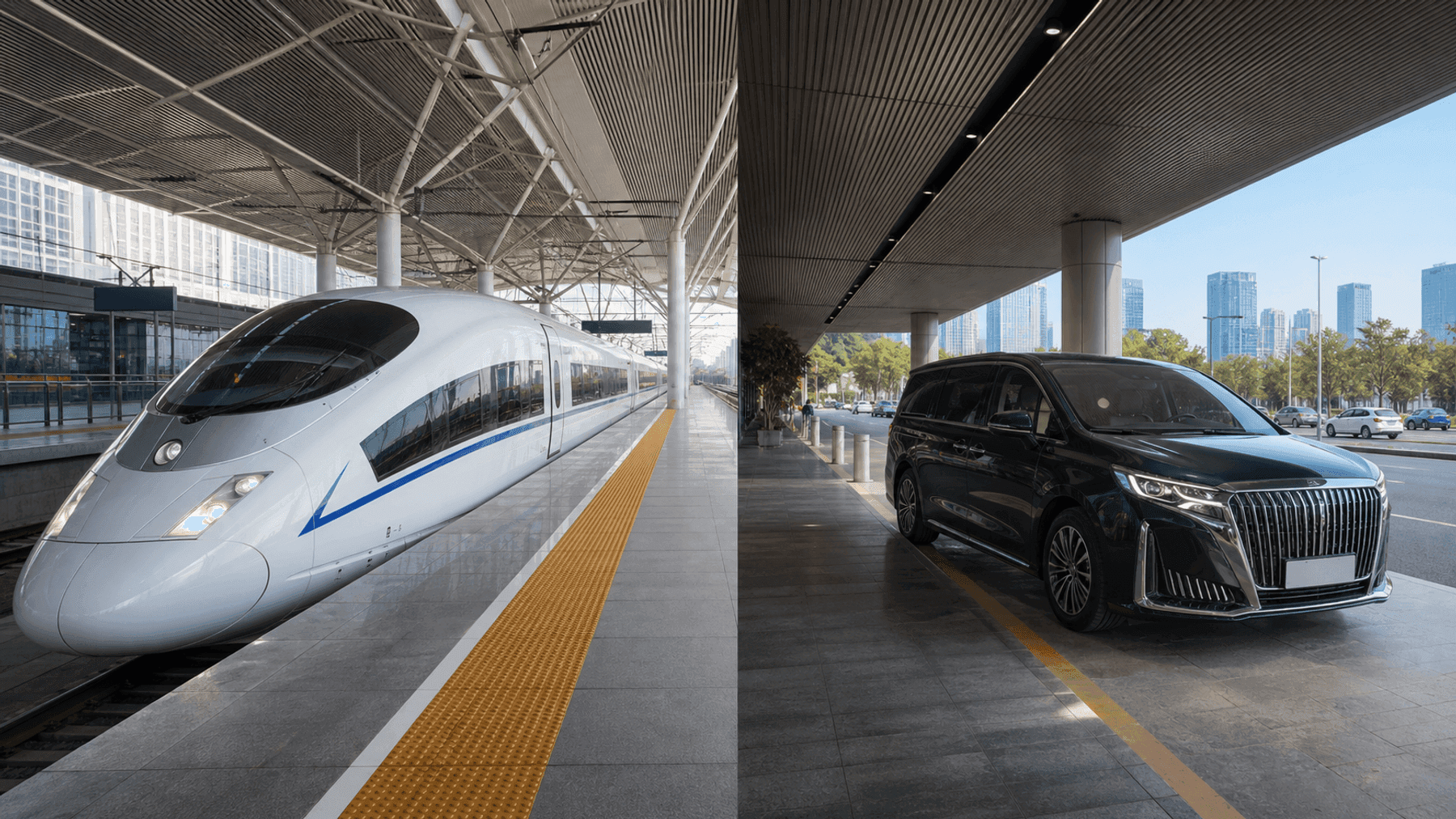
For many city-to-city routes in China, high-speed trains are often more practical than domestic flights. Train stations are usually closer to downtown areas than airports, boarding is straightforward, and trains are less affected by weather. For short and medium-distance routes, the total travel time by train may even be shorter than flying.
Advantages of China Bullet Trains
· Ultra-fast: 250-350km/h; Beijing → Shanghai only takes 4.5 hours
· Wide coverage: Connects major cities, scenic spots and remote areas
· Comfortable: Spacious seats, air conditioning and clean restrooms
· Punctual: 99.8% on-time rate, much better than flights
China High Speed Rail Overview
China high-speed trains, also called “G/D/C trains” or “bullet trains ”, connect nearly all major cities. The G trains are the fastest, D trains are slightly slower, and C trains are for short intercity routes. In addition to high-speed trains, China has other types of trains suitable for different travel needs.
Train Code | Speed | Route | Notes |
G | 300–350km/h | Major cities, long-distance | Fastest high-speed trains, mostly 2nd & 1st class seats |
D | 200–250km/h | Medium-long routes | High-speed EMU trains, may include overnight routes |
C | 160–200km/h | Short intercity / city pairs | Regional commuter style, short trips |
Z | 120–160 km/h | Overnight long-distance | Non-stop or few stops, sleeper berths |
T | 120–160 km/h | Long-distance | Stops at major cities, overnight sleeper optional |
K | 100–140 km/h | Regional, smaller cities | Economical, slower, sleeper optional |
This table gives foreign travelers an overview of the different train types in China, including high-speed and conventional trains. Choosing the right train depends on speed, comfort, travel distance, and price.
How to Book Train Tickets for Foreigners
Required Documents:
Foreigners must use an original valid passport (6+ months validity) to book tickets. Temporary passports or copies are NOT accepted.
Booking Channels Compared
Foreign travelers can book through four main channels. Each trades convenience against fees and English support:
Channel | Pros | Cons |
|---|---|---|
12306 English Website/App | Official exclusive platform, zero service fee, real-time ticket inventory, full English interface | Account registration and real-name verification required, limited payment options |
Railway Station Counter | No pre-registration, cash & credit card acceptable, basic English-speaking staff available | Long queuing time, scarce tickets during peak seasons, mostly same-day tickets available |
Authorized Travel Apps | Full English setting, foreign currency payment supported, no real-name check, flexible refund & reschedule | Extra service charge, delayed ticket stock update, non-official platform |
Authorized agencies | Widely distributed locations, shorter waiting time, passport accepted for booking | High service fees, sparse outlets in remote areas, complicated refund procedures |
Step-by-Step: Book via 12306 English
Step 1: Register on 12306 English
Enter your full name, passport number, expiration date, and contact info.
Step 2: Search Routes
Enter departure city, arrival city, travel date, and passenger info. Confirm the station names
Step 3: Choose Train & Class
Pick G/D/C train based on departure time, arrival time, and desired seat class (Second, First, Business).
Step 4: Payment
12306 may accept international cards. Otherwise, third-party platforms often support foreign cards.
Step 5: Check & Use Your Ticket
Foreigners can check their e-ticket on 12306 English under “My Orders”. The ticket is linked to your passport. At the station:
· Look for departure hall screens for gate info
· Check carriage number on the ticket
· Use your passport at the automatic gate or manual lane
12306 Identity Verification for Foreign Passport Holders
For foreign travelers, identity verification is one of the most important steps when booking China high-speed train tickets.
Information Required for Verification
• Passport name
• Passport number
• Date of birth
• Nationality
• Contact information
Common Name Entry Mistakes
• Leaving out a middle name
• Using a nickname
• Reversing first name and surname
• Using initials
Copying the name directly from the passport is usually the safest option.
What If Verification Fails?
Do not worry if verification fails.
First, check:
Is the passport number correct?
Is the passport name complete?
Are there any spelling mistakes?
If the problem remains, visit a railway station ticket counter.
Bring:
• Original passport
• Booking information
Staff at major stations are usually able to assist foreign travelers.
Key Booking Notes
- Book early: 7–15 days in advance during holidays/summer peak
- No same-day tickets for popular routes: e.g., Beijing → Shanghai
- Name must match passport: No nicknames allowed
Train Classes Explained
Most foreign travelers ride Second Class, which is comfortable and well-priced. Use the typical fare ranges below to decide:
Class | Typical fare (CNY) | Facilities | Best for |
|---|---|---|---|
Business Class | 800-2000 | Reclining flat seats, private compartment, free meals, access to VIP lounge | Business travelers & passengers pursuing premium comfort |
First Class | 300-800 | Spacious adjustable seats, power sockets, foldable tray tables | Mid-high budget travelers for long-distance trips |
Second Class | 150-400 | Standard seats, charging ports, air conditioning, overhead luggage racks | Regular tourists focusing on cost performance |
Standing ticket | Same as second class | No fixed seat; stay at carriage connection area | Short-distance emergency travel when tickets are fully sold |
Which Class Should You Choose?
Traveler Type | Recommended Class |
|---|---|
Budget traveler | Second Class |
First-time visitor | Second Class or First Class |
Family with children | First Class if budget allows |
Business traveler | Business Class |
Long journey over 5 hours | First Class or Business Class |
Short trip under 2 hours | Second Class |
For most visitors, Second Class is perfectly fine. The main reasons to upgrade are luggage space, quieter surroundings, wider seats, and more personal space.
How Much Luggage Can You Bring?
Most travelers can bring normal travel luggage onto China’s high-speed trains, including suitcases, backpacks, handbags, and small personal items. Unlike flights, high-speed trains usually do not require checked baggage for ordinary suitcases.
However, luggage should be within a reasonable size and weight. Oversized or extremely heavy items may be rejected at security or require special handling.
Foreign travelers should also remember that high-speed trains do not have airline-style checked baggage counters at most stations. You are generally responsible for carrying and storing your own luggage.
Practical tip: Pack light if your itinerary includes many train transfers. A medium-sized suitcase plus a backpack is usually much easier to manage than several large bags.
Large Suitcases
Large suitcases are generally allowed on China’s high-speed trains, but storage space can be limited, especially during busy travel periods.
Small and medium-sized bags can usually be placed on the overhead luggage racks. Larger suitcases are usually placed in the luggage storage areas near the ends of the carriage.
If you board late, the large luggage area may already be full. In that case, you may need to place your suitcase behind the last row of seats if space is available, or ask train staff for help.
Practical tip: If you travel with a large suitcase, board as soon as your train starts boarding so you have a better chance of finding luggage space.
Where to Store Bags
There are usually three common places to store luggage on China’s high-speed trains.
The first option is the overhead luggage rack. This is best for backpacks, small suitcases, handbags, shopping bags, and coats.
The second option is the large luggage area at the end of the carriage. This is the best place for larger suitcases.
The third option is the space around your seat, but this should only be used for small personal items. Large bags should not block the aisle, doors, or emergency exits.
Practical tip: Keep valuables such as passports, wallets, phones, laptops, and cameras in a small bag with you rather than leaving them in a large suitcase.
Traveling with Oversized Items
Oversized items can be more complicated on China’s high-speed trains. Items such as bicycles, large sports equipment, musical instruments, camping gear, or bulky boxes may not always be accepted in their original form.
Some items may need to be folded, packed, boxed, or transported separately. For example, a folding bicycle may be easier to bring than a full-sized bicycle, but it still needs to meet station and train requirements.
If you plan to travel with oversized luggage, it is better to check the rules before your departure date. Do not assume that anything accepted by airlines or buses will automatically be accepted on high-speed trains.
Practical tip: For oversized items, contact the booking platform, station service desk, or railway customer service in advance. If the item is not essential, consider shipping it separately.
Peak Holiday Travel in China
Period | Difficulty Level | Booking Advice | Who Should Avoid |
Chinese New Year | Extremely High | Book as early as possible | First-time travelers |
National Day Golden Week | Very High | Avoid first and last travel days | Flexible tourists |
Labor Day Holiday | High | Book morning trains early | Family travelers |
Summer Vacation | Medium to High | Book popular routes early | Budget travelers |
Friday Evening | Medium | Avoid business routes | Short-trip travelers |
Sunday Evening | Medium | Avoid return routes | Weekend travelers |
Practical tip: If possible, avoid traveling on the first and last day of major Chinese holidays. These are usually the busiest travel days.
Complete Boarding Guide
· Security Check
Arrive 45 mins early. Show passport + e-ticket/paper ticket; pass security (no knives or flammables).
· Waiting & Boarding
Check train info on LED screens and wait at the assigned hall. Boarding: 15 mins before departure; closes 3 mins before departure.
· Onboard & Luggage Rules
- No smoking: Strictly forbidden on board and platforms (fines apply)
- Facilities: Free Wi-Fi, charging ports, restrooms, dining car
E-Ticket Guide
China’s high speed rail uses e-tickets nationwide. Foreign travelers don’t need paper tickets—just use your passport.
- Boarding: Swipe your original passport directly at the gate; no ticket exchange needed.
- Confirmation: Receive an English SMS/email with train number and seat after booking.
- Receipt: Print an English receipt at station self-service machines if needed.
- No passport: Not allowed; e-tickets are linked to your original passport.
China Bullet Train Tips for First-Time Foreign Travelers
Tip 1: Arrive Early
For large stations, arrive 45–60 minutes before departure. For smaller stations, 30–45 minutes is usually enough. During Chinese New Year, National Day holiday, Labor Day, or summer travel season, arrive earlier.
Tip 2: Use the Exact Station Name
Do not book “Shanghai” casually. You may need Shanghai Hongqiao or Shanghai Railway Station. In Beijing, many high-speed trains use Beijing South or Beijing West.
Tip 3: Bring Your Original Passport
Your passport is your boarding document. The ticket is linked to your identity, and foreign passengers can purchase real-name tickets with valid passports according to 12306’s English FAQ..
Tip 4: Check the Gate Number
Train stations display gate information on large boards. Your gate usually opens around 10–20 minutes before departure and closes shortly before the train leaves.
Tip 5: Keep Liquids and Power Banks Accessible
China railway stations have security checks. Keep electronics, power banks, and liquids easy to access.
Tip 6: Do Not Cut It Too Close
High-speed trains leave on time. If you miss your train, you may need to change your ticket, buy a new one, or ask at the service counter.
Refund & Reschedule Official Rules
Processing Time | Refund Deduction Rate | Reschedule Charge |
≥8 days before departure | Free of charge | Free |
4–7 days before departure | 5% of full ticket fare | Free |
1–3 days before departure | 20% of full ticket fare | Free |
After scheduled departure | Non-refundable; one same-day change available | Free |
All refunds return to original payment account; credit card refunds take 1–7 working days to arrive.
Station Facilities
China’s high speed rail stations are fully equipped with convenient services for foreign travelers.
· Free Wi-Fi: Full station coverage; verify your phone number to connect.
· Charging stations: Free power outlets in waiting halls and platforms.
· Nursing rooms: Private spaces for parents with babies, with cribs and warm water.
· VIP lounges: Free for 1st/business class passengers; quiet and comfortable.
· Currency exchange: Available at major stations for USD/EUR/GBP to CNY.
· Luggage storage: Self-service lockers, small ¥15/day, large ¥25/day.
Food & Drinks on Board
Food options on bullet trains are diverse, from simple meals to hot dishes, snacks and drinks.
- Dining car: Located in the middle of each train; rice/noodle/burger sets ¥30–60.
- Trolley service: Staff sell snacks, drinks, coffee and instant noodles regularly.
- Bring your own: Odor-free food allowed; alcoholic drinks forbidden.
- Vegetarian/halal meals: Request in advance on 12306; available on selected trains.
Top China High Speed Rail Routes
Route 1: Beijing ↔ Shanghai
As China’s landmark high-speed trunk line with a total length of 1,318 km, Beijing-Shanghai HSR connects Beijing (China’s political core) and Shanghai (national financial hub).
Basic Route Data
Departure & Arrival: Beijing South Railway Station → Shanghai Hongqiao Railway Station;
Over 50 daily G-trains depart from 6:30 AM to 7:00 PM;
Second Class: CNY 553–661, First Class: CNY 930–1060, Business Class: CNY 1750–2320 (Price updated June 2026).
Core Sightseeing Highlights
Beijing Side: Forbidden City, Badaling Great Wall, Tiananmen Square; intermediate stop Tai’an for Mount Tai; Nanjing stop for Ancient City Wall & Confucius Temple; Shanghai Side: The Bund, Yu Garden, Lujiazui Financial District, Nanjing Road.
Foreign Traveler Insider Tips
1. Choose early morning flagship trains like G1 & G13 for shortest ride; book tickets 15 days ahead via 12306 English or overseas booking platforms during May Day & National Day holidays; 2. Currency exchange counters and English service desks are available inside both major stations; 3. Enjoy varying landscapes from North China Plain to southern water towns along the ride.
Route 2: Shanghai ↔ Hangzhou
A classic one-day-trip HSR route across Jiangnan, one of China’s shortest premium bullet train lines; the fastest trip only takes 45 mins, perfect for day return travel from Shanghai to Hangzhou to explore West Lake and traditional tea culture.
Basic Route Data
Departure: Shanghai Hongqiao → Hangzhou East; non-stop frequent departures every 10–20 mins all day;
Second Class CNY73–82, First Class around CNY120, no mandatory Business Class option.
Core Sightseeing Highlights
Hangzhou Highlights: West Lake boat cruise, Lingyin Temple & Feilai Peak Stone Caves, Longjing Tea Plantations (tea picking & tasting available), Qinghefang Ancient Food Street; short connecting bullet trains to Wuzhen & Xitang Water Towns.
Foreign Traveler Insider Tips
Depart Shanghai after breakfast and return at dusk to reserve 6–7 full sightseeing hours;
Subway directly links Hangzhou East Station to West Lake with no taxi needed;
Local villagers in Longjing Village offer basic English tea culture introduction.
Route 3: Beijing ↔ Xi’an
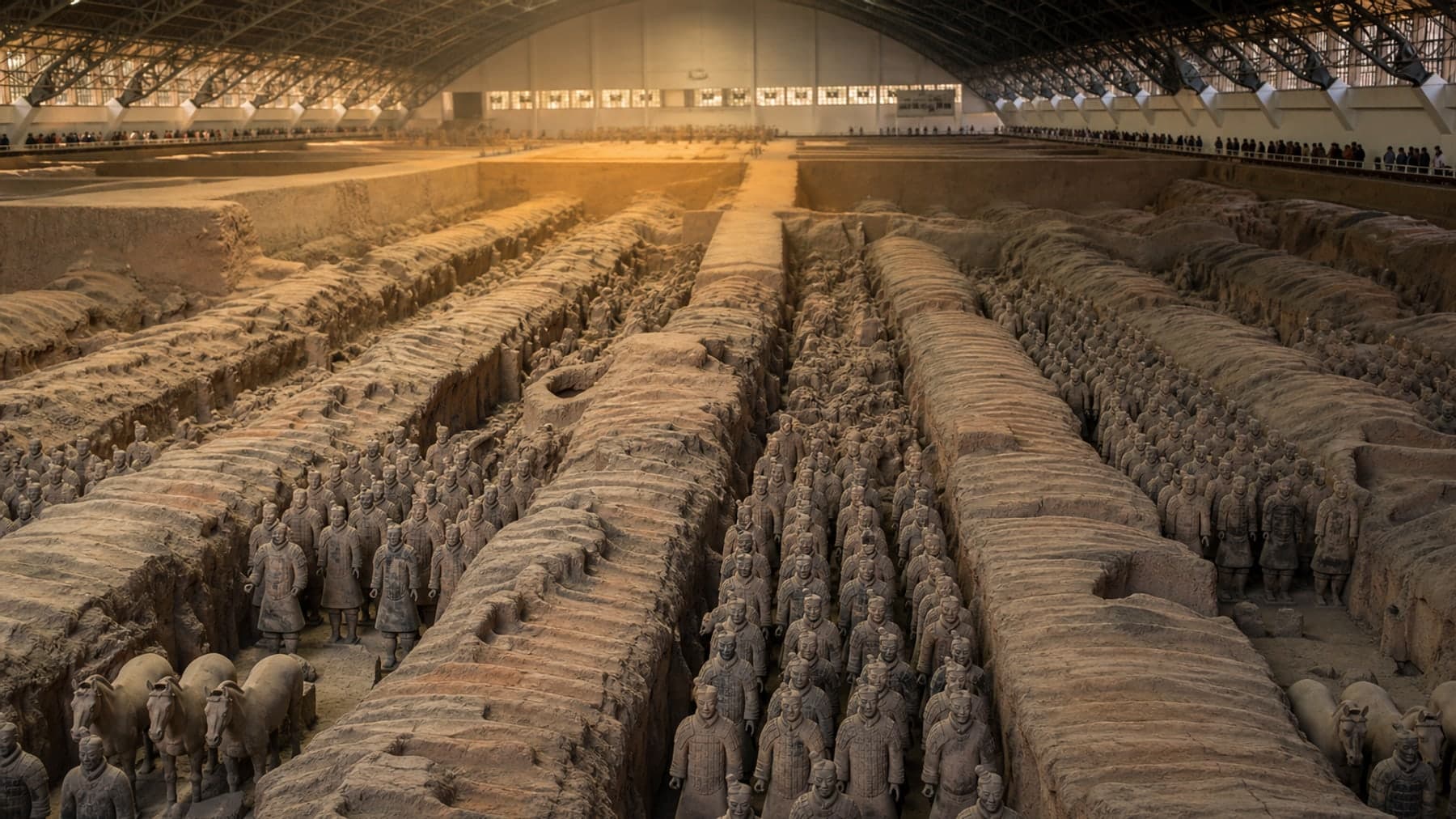
Historic intercity rail linking two millennia-old ancient capitals across North & Northwest China; top G-trains complete the journey in 4 hours 10 mins, top pick for worldwide history lovers eager for Terracotta Army and Tang Dynasty culture.
Basic Route Data
Departure: Beijing West → Xi’an North; over 30 daily G & D trains; G-train Second Class CNY515–595, First Class CNY820–950; cheaper D-series trains cost CNY410–440 (7-hour travel).
Core Sightseeing Highlights
Xi’an Must-sees: Terracotta Army Museum, Xi’an Ancient City Wall (bike rental available), Giant Wild Goose Pagoda, Tang Paradise, Muslim Quarter for authentic Northwest food; short extension HSR to Huashan Mountain Scenic Area.
Foreign Traveler Insider Tips
Pre-book tickets via 12306 English; English-speaking tour guide rental at Xi’an North Station exit;
Avoid National Day holiday due to massive crowds at Terracotta Army;
Enjoy unique Loess Plateau hills along the railway ride.
Route 4: Guangzhou ↔ Shenzhen ↔ Hong Kong West Kowloon
China’s only cross-border HSR directly connecting mainland China and Hong Kong; core Greater Bay Area commuter line: Guangzhou South → Shenzhen North (30 mins), Shenzhen North → Hong Kong West Kowloon (18 mins); one-stop immigration inspection available for overseas visitors with valid Hong Kong entry documents.
Basic Route Data
High-frequency all-day departures; Guangzhou-Shenzhen Second Class CNY75; Guangzhou-Hong Kong direct ticket CNY215; cross-border tickets purchasable on 12306 English with passport verification.
Core Sightseeing Highlights
Guangzhou: Chen Clan Academy, Beijing Road, authentic Cantonese morning tea; Shenzhen: Shenzhen Bay, Overseas Chinese Town; Hong Kong: Victoria Harbour night view, Victoria Peak, Central Business District.
Foreign Traveler Insider Tips
Complete mainland exit & Hong Kong entry formalities inside West Kowloon Station in one stop;
Double-check your Hong Kong visa-free policy before departure;
Subway links connect three cities seamlessly after arriving by bullet train.
Route 5: Chengdu ↔ Chongqing
Popular Bashu short-distance bullet train line; fastest trip between Chengdu East and Chongqing West takes only 1.5 hours, famous for giant panda visits, spicy Sichuan food and unique mountain-city landscape, top route for European & American backpackers.
Basic Route Data
Non-stop daily departures; Second Class CNY154; spare tickets widely available even during peak seasons without advance rush booking.
Core Sightseeing Highlights
Chengdu: Chengdu Research Base of Giant Panda Breeding, Kuanzhai Alley, Jinli Ancient Street; Chongqing: Hongyadong Cave House, Jiefangbei CBD, Yangtze River Cableway.
Foreign Traveler Insider Tips
Visit panda base in Chengdu in the morning then take afternoon train to overnight in Chongqing;
Most local restaurants offer English menus and non-spicy options on request.
Route 6: Kunming ↔ Dali ↔ Lijiang
Top Yunnan natural scenery route connecting Kunming, Dali (Erhai Lake & Cangshan Mountain) and Lijiang Ancient Town; total segmented travel time 3–5 hours, favored by Southeast Asian travelers.
Basic Route Data
Kunming South→Dali: 2h (CNY120 Second Class); Dali→Lijiang:1.5h (CNY78 Second Class).
Core Sightseeing Highlights
Kunming Stone Forest, Erhai Lake cycling in Dali, Lijiang Ancient Town & Jade Dragon Snow Mountain.
Foreign Traveler Insider Tips
Prepare light jackets for high altitude across Yunnan; most local homestays have English-speaking hosts.




Common Problems and Solutions
·Problem: 12306 verification does not work
Try checking your passport name order, passport number, expiration date, and photo quality. If it still fails, use a station counter or a third-party booking platform.
·Problem: The train is sold out
Try nearby stations, earlier or later departures, First Class instead of Second Class, or one-transfer routes. On 12306, waitlist features may be available depending on the route and ticket type.
·Problem: I booked the wrong station
Check whether you can change the ticket before departure. If not, cancel and rebook if time allows.
·Problem: Passport gate does not scan
Use the manual channel. Staff can check your passport and ticket record.
·Problem: I cannot find my platform
Look for your train number, not just your destination. Many trains may go to the same city.
China Train Travel Checklist for Foreigners
Before booking:
Confirm your exact city and station
Check passport validity
Compare train times and seat classes
Avoid tight transfers
Check Chinese holiday dates
Before departure:
Bring your original passport
Save booking confirmation
Arrive 45–60 minutes early
Prepare translation app
Keep luggage manageable
Check gate and carriage number
On the train:
Keep your ticket info accessible
Store luggage quickly
Use headphones
Keep valuables with you
Prepare snacks for long routes
Common Mistakes Foreign Travelers Make
China’s high-speed rail system is efficient, punctual, and foreigner-friendly, but first-time travelers can still run into problems if they are not familiar with local rules.
·Booking Too Late
One of the biggest mistakes foreign travelers make is booking train tickets too close to the departure date. China’s high-speed train tickets can sell out quickly, especially on popular routes such as Beijing–Shanghai, Shanghai–Hangzhou, Guangzhou–Shenzhen, Xi’an–Chengdu, and Hong Kong–Guangzhou.
Foreign travelers should pay extra attention to Chinese national holidays, as demand can be extremely high. Waiting until the last minute may leave you with limited seat options, inconvenient departure times, or no tickets at all.
Practical tip: If your itinerary includes multiple cities, book the key long-distance train segments first, then arrange hotels and local transport around those train times.
·Going to the Wrong Station
Many Chinese cities have more than one railway station. This can be confusing for foreign travelers because stations with similar city names may be located far apart.
Practical tip: Always check the exact station name on your ticket, including words like “South,” “West,” “North,” or “Hongqiao.” Copy the full station name into a map app before departure.
·Arriving Too Late
China’s high-speed trains are punctual, and boarding usually closes several minutes before departure. Foreign travelers who are used to arriving just a few minutes before train departure may find the process more time-consuming than expected.
Before reaching the platform, passengers normally need to go through security checks, passport or ID verification, ticket gate checks, and sometimes a long walk inside a large station.
For major stations such as Beijing South, Shanghai Hongqiao, Guangzhou South, Shenzhen North, Hangzhou East, or Chengdu East, arriving too late can be risky because the station itself is large and crowded.
Practical tip: Arrive at the station at least 45–60 minutes before departure if it is your first time taking a train in China. For smaller stations or experienced travelers, 30–45 minutes may be enough.
·Using Different Passport Information
Foreign travelers must use the same passport information when booking tickets and boarding the train. The name, passport number, nationality, and other details should match the travel document used at the station.
A common mistake is booking a ticket with an old passport number, a nickname, a shortened name, or a different spelling from the passport. Even a small mismatch may cause problems during identity verification.
This is especially important for travelers whose names contain middle names, hyphens, special characters, or different transliteration formats.
Practical tip: When booking China train tickets, enter your name exactly as shown in your passport. Keep the same passport with you when entering the station and boarding the train.
·Choosing the Wrong Seat Class
China’s high-speed trains usually offer several seat classes, including Second Class, First Class, and Business Class. Some routes may also offer Premium Class or other special seat types.
Second Class is the most common and budget-friendly option. It is suitable for most travelers and offers good comfort for short and medium-distance trips.
First Class provides wider seats, more legroom, and a quieter environment. It may be a better option for business travelers, families, or those taking longer rides.
Business Class is the most premium option, with spacious reclining seats and a more private experience. However, it can be much more expensive and is not always necessary for short trips.
Practical tip: For trips under 2 hours, Second Class is usually enough. For trips of 3–5 hours, First Class can be worth considering. For long journeys or travelers who value comfort, Business Class may be a good choice.
Practical Tips
Tip1 Pre-arrival prep: Download translator app and 12306 English overseas before landing; restricted network blocks overseas app download in China.
Tip2 Data control: Turn on mobile data limit to avoid unexpected overcharge on international credit cards.
Tip3 Dual backup: Prepare both physical and e-ticket for long multi-country trips against booking failure.
Tip4 Public Wi-Fi safety: Avoid bank/payment login on unknown free station Wi-Fi to prevent personal info leakage.
Tip5 Troubleshooting: Restart phone or visit manual counter when passport scanning fails or train info error occurs.
Tip6 Airport instant purchase: Official railway counters near Exit5–8 at major airports (Beijing/Shanghai/Chengdu) with basic English-speaking staff.
Tip7 Cheap agent warning: Ultra-low-price tickets from unknown agents may lead to boarding or reschedule restrictions.
Tip8 Offline backup: Save offline maps & translation packs before travel for zero-network remote areas.
Real Stories from My Clients
“A Canadian couple traveled to China in April 2026 without pre-booked train tickets and failed to book Beijing-Xi’an tickets after landing. I helped them buy official physical tickets and pick proper seats within 8 mins at the airport, and they visited Terracotta Army smoothly via high speed rail.”
“A European business visitor pre-ordered 2026 12306 English e-ticket but got stuck during activation. I guided remote setup, and he finished his Beijing-Shanghai business trip by high speed rail successfully.”
Final Advice
Reliable booking plan is core of qualified China train travel guide. Choose physical tickets for short trips, elder visitors & old devices or 12306 English e-ticket for multi-country business travel and new smartphones. Master China train classes explained for proper seat selection and memorize useful China bullet train tips, finish all booking setup before arrival for hassle-free high speed rail journey across China.









Traveler Discussions
Questions from travelers